
The Queen of Swords by Jazmina Barrera, translated from the Spanish by Christina MacSweeney
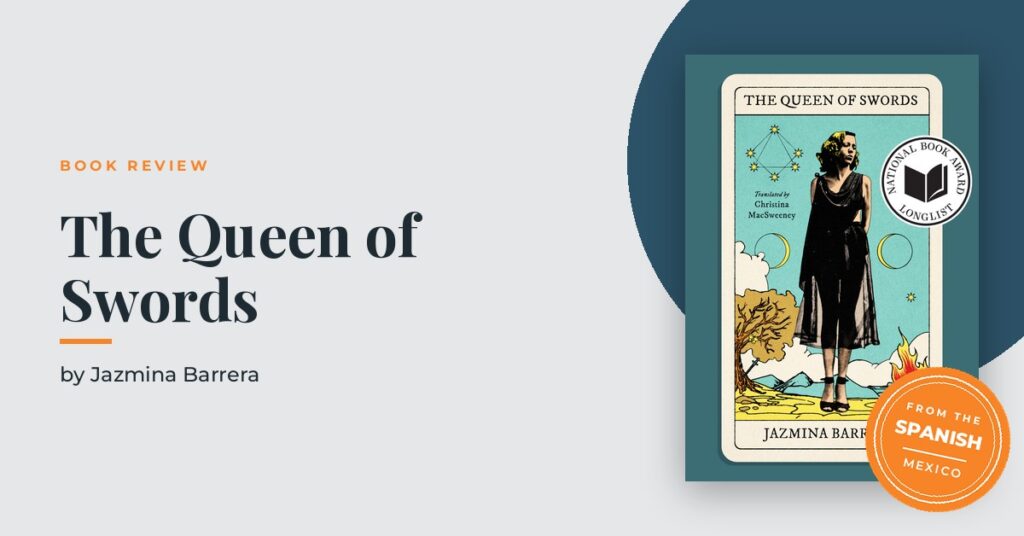
Elena Garro deserves to be a footnote in no one’s story but her own.
Jazmina Barrera set out to write a short essay about Elena Garro—the Mexican writer, dancer, activist, and mystic who spent most of the twentieth century being reduced to a footnote in her ex-husband Octavio Paz’s biography. The essay refused to stay short. The Queen of Swords is what happened when Barrera let her curiosity win: a sprawling, genre-defying act of literary excavation that treats its subject with the same restless, contradictory energy Garro apparently brought to everything she touched.
Garro is a genuinely difficult person to pin down, and Barrera doesn’t try to flatten her into something tidier than she was. This is a woman who wrote one of the foundational works of Latin American magical realism years before the men who get credit for inventing it, who danced, organized, antagonized, contradicted herself in interviews, and left behind an archive that resists every attempt to build a clean narrative out of it. Barrera’s real subject isn’t just Garro’s life—it’s the impossibility of ever fully retrieving a life, especially one that history had every incentive to misfile.
What keeps the book from ever feeling like a straightforward biography is how visible Barrera makes her own process—the archives she digs through, the dead ends, the moments where the record contradicts itself and she has to sit with the contradiction rather than resolve it. Reading The Queen of Swords feels less like being told a story than being invited along on an investigation, with all the uncertainty that implies.
Christina MacSweeney’s translation—her fourth collaboration with Barrera—carries the same lyrical restlessness Barrera’s essay-driven prose is known for, equally comfortable in intimate reflection and hard archival detail. The result is a portrait that honors its subject’s refusal to be simplified, and it makes an overwhelming case for why Elena Garro deserves to be a footnote in no one’s story but her own.
This review originally appeared in the Fall 2026 Global Reads issue of Shelf Unbound, our free magazine celebrating the best indie and small press books.
Publisher: Two Lines Press