
The Blue Book of Nebo by Manon Steffan Ros, adapted from the Welsh by the author
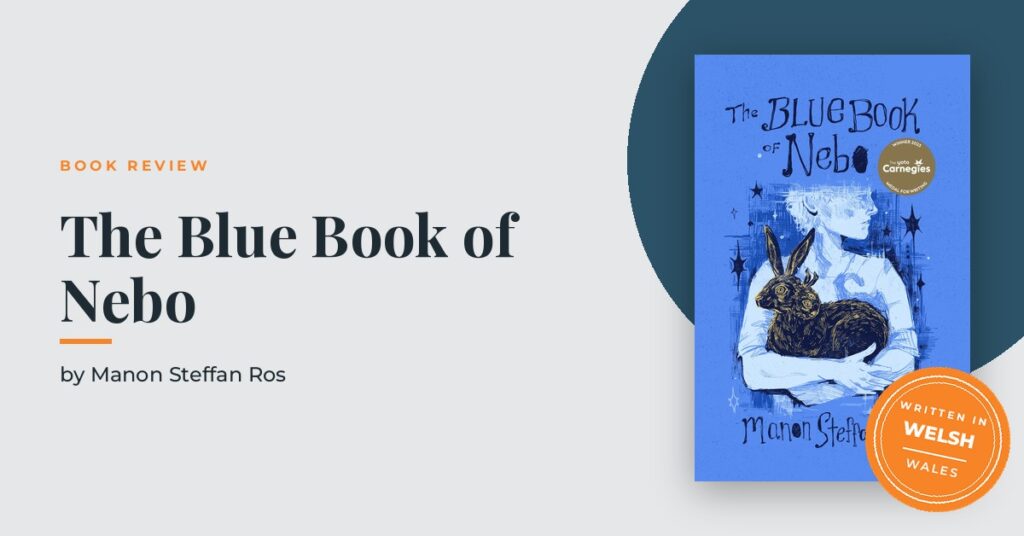
An apocalypse story about what, exactly, is still worth writing down.
Most end-of-the-world novels want to show you the wreckage. The Blue Book of Nebo wants to show you what two people do with a notebook and a pencil once the wreckage is old news. Set in a hilltop house above a real village in north-west Wales, eight years after a nuclear disaster wipes out the world Dylan barely remembers, this slim, devastating novel finds its power not in spectacle but in the smallest possible unit of survival: a mother and son, taking turns filling the pages of a single shared journal.
The setup is disarmingly simple. Dylan’s mother, Rowenna, assigns him the journal as a kind of homeschool exercise—something to keep his mind sharp when there are no more classrooms left to sharpen it. But when Dylan asks her to write too, to set down the story of “The End” and the vanished world he was too young to hold onto, the book becomes something else entirely: a joint record, written in secret from each other. “We’ve agreed not to read what the other has written, just in case,” Dylan writes. “In case of what, I’m not sure.” That uncertainty is the engine of the whole novel—two people who love each other fiercely, each hiding something on the page the other isn’t allowed to see.
Ros splits the narration cleanly in two, and the contrast is where the novel does its quietest, most devastating work. Dylan writes like someone who has only ever known a world of rabbit snares and vegetable beds and a little sister to mind—practical, unsentimental, occasionally very funny, because he has no old world to mourn. Rowenna writes like someone carrying the entire weight of what used to exist: iPhones, school runs, a version of herself she can no longer fully access. Reading the two accounts side by side feels like watching a language die and a new one get invented in real time, right there on the page.
What keeps this from ever curdling into misery-lit is how alive the writing is to small, strange joys—a scavenged bar of chocolate a month past its sell-by date, a mallet swung at a road sign that will become the lid of a mushroom box, the reckless thrill of finding another living person on an empty road and not knowing, for one terrifying second, whether to run or to weep. Ros writes survival as a series of tiny, hard-won luxuries rather than a single grand ordeal—and there’s something quietly radical, too, about a novel this concerned with language itself: written first in Welsh, adapted into English by Ros herself, its characters scavenging books from abandoned houses the way other survival stories scavenge canned food, because “they deserve to be read… they deserve to be appreciated.” In a novel about the end of everything, that single insistence might be the most hopeful sentence in the book.
The mystery at the heart of the novel—where Dylan’s baby sister Mona actually came from, and what secrets Rowenna and Dylan have kept from each other for eight years—unspools with a patience that will frustrate readers looking for a thriller and reward the ones willing to sit with a slower kind of dread. This is a book that trusts its readers, young and old alike, to hold complicated, unresolved feelings without needing them tied up neatly. It has already collected a shelf’s worth of prizes on its way to this English-language edition, and it’s easy to see why: The Blue Book of Nebo is the rare apocalypse story that leaves you thinking less about how the world ended and more about what, exactly, is still worth writing down.
This review originally appeared in the Fall 2026 Global Reads issue of Shelf Unbound, our free magazine celebrating the best indie and small press books.
Publisher: Deep Vellum