
Shelf Media hosts the annual Shelf Unbound Indie Best Book Competition for best self-published or independently published book. You can find the winner, finalists, long-listed, and more than 100 notable books from the competition in the December/January 2025 issue of Shelf Unbound.
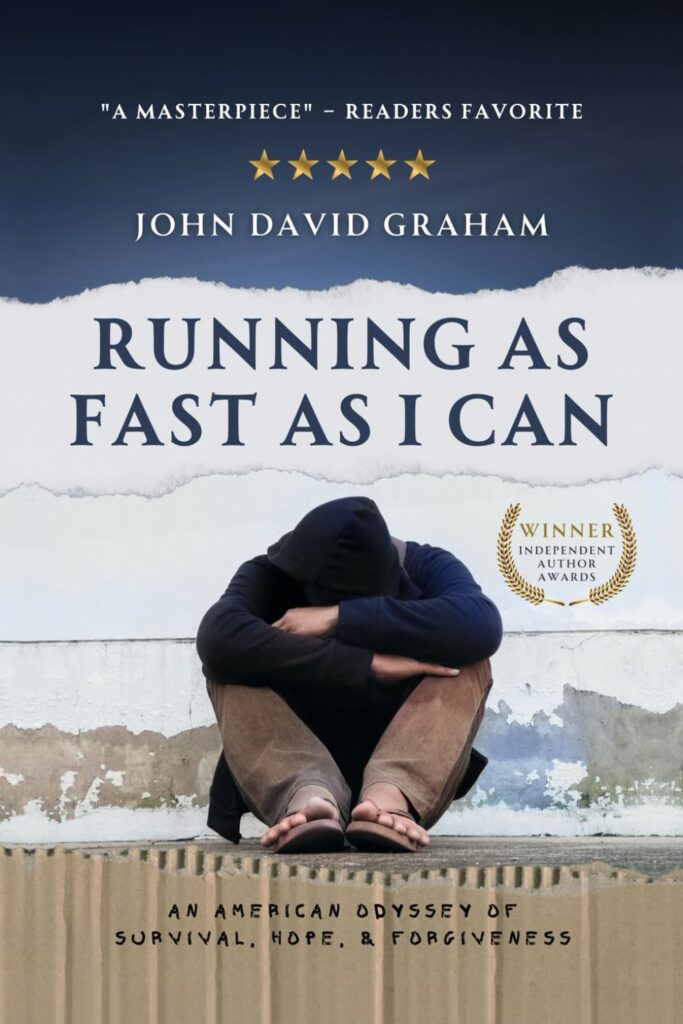
Running As Fast As I Can
“… often profound historical novel. Our verdict: GET IT!” – KIRKUS REVIEWS
Growing up in the mill slums of Pittsburgh, a broken family is the only life Daniel Robinson has ever known. When he turns 18, he escapes the only way he can, spending the next decade wandering homeless throughout the country during the turbulent 1960s.
Running from the demons of his past, Daniel finds the streets even more violent and unforgiving, but he also discovers kindness and hope among the outcasts he meets. Daniel finally falls in love with Kate Fitzgerald, a young waitress who was running from her own past. Together they get a second chance at happiness and the family they both want.
Because of his life on the streets, Daniel is offered a job helping men coming from prison. When asked to find housing for Charles Vickers, a black man who spent twenty years in prison for a crime Daniel is convinced he never committed, he and his wife open their own home to him. This enrages the community, especially when a local girl disappears. Violence erupts—with Daniel as the focus of their rage.
Should he stay and fight for Charles and put his family at risk… or run away again?

About The Author: John David Graham
JOHN DAVID GRAHAM is the founder of Good Samaritan Home, a housing / mentoring program helping men and women restart their lives after prison. In the past twenty-four years, he and his staff have helped more than 2,500 people get a second chance and reenter the community.
Prior to publishing his debut novel RUNNING AS FAST AS I CAN at age 75, he was a door-to-door salesman, children’s home counselor, substitute school teacher, truck driver, fireman, building contractor, minister and journalist. John says it was those “detours” that helped him develop the “calloused hands and tender heart” needed to write this story.
Interview with John David Graham:
What first sparked the idea for your book, and how did it grow into the story it became?
JDG: In my work with all the men and women coming from prison, I saw a common thread—nearly all of them came from a dysfunctional family, or no family at all. Although I had never been to prison, my background, and my feelings of abandonment growing up were not much different from theirs. That was when I realized too many of us feel we started out in life running behind people from normal (if there is such a thing) families. In other words, we all need a second chance.
Introduce us to the world of your book. What should readers know about the story and the people (or ideas) at its center?
JDG: Initially the idea started in 10th grade when I read Somerset Maugham’s semi-autobiographical novel “Of Human Bondage.” I identified with the emotional club foot the main character struggled with. Then having watched “Forrest Gump” and seeing the audience reaction to his limitations, I realized we all have a limp of some sort. That gave me the backdrop for the story that is roughly based on my travels, emotionally and physically, through the turbulent 60s and beyond. Overall, this was intended to be a testament to the healing balm of love. When two broken people lean on one another, they can walk straight together.
Was there a particular moment or scene that changed how you understood your own story as you were writing it?
JDG: There are so many scenes that still elicit an emotional response when I read them. But I think it was the kitchen conversion where Daniel describes how much Pastor Duncan has damaged him, even after twenty years. The ex-offenders I work with have overt and obvious damage, but in writing that scene I realized that too many, if not all of us, have hidden childhood damage that we still carry with us. As Ernest Hemmingway said. “We are all broken by life. But some of us are stronger in the broken places.” That’s Daniel’s story, and that’s my story.
What themes or emotions run beneath the surface of your book—what were you hoping to explore or uncover through this story?
JDG: Some of us have been born into poverty, or abuse, or a handicap. Although we are doing the best we can, running as fast as we can, we can never catch up with those who go through life with no setbacks. “If only I had been born into another family. If only I was normal. If only I had a second chance.” That, I believe, is a universal cry, and that is Daniel’s story. Like many of us, he needed a second, third and fourth chance to succeed. This then is a story of hope for those who feel no hope.
If a reader stops you to talk about your book, what do you most hope they’ll say it made them think or feel?
JDG: I’ve been fortunate that readers often reach out to me privately to confide how much Daniel’s story has meant to them personally — and how they see themselves or their family members on the page. Additionally, many readers have also posted reviews publicly on Amazon and Goodreads with similar feedback. As an author, it means a great deal to hear that my story has reached people so deeply. Here’s some of what they have said:
“So much of this book rang true that it’s hard to imagine that it’s fiction.”
“The joy, the pain, the fear, the anger, and the despair. Be prepared to get lost in the story.”
“This isn’t a story written from the outside looking in—it’s raw, lived experience.”
“A story I will never forget.”
“It was so good I hated for it to end.”
“All in all, this is the most meaningful and gripping novel I have ever read.”
Find a featured excerpt of Running As Fast As I Can on PAGE 45 in the December/January/February Issue: 2025 Indie Best Award Winners.

Continue Reading…
Article originally Published in the December/January/February 2025 Issue “2025 Indie Best Award Winners”