
Shelf Media hosts the annual Shelf Unbound Indie Best Book Competition for best self-published or independently published book. You can find the winner, finalists, long-listed, and more than 100 notable books from the competition in the December/January 2025 issue of Shelf Unbound.
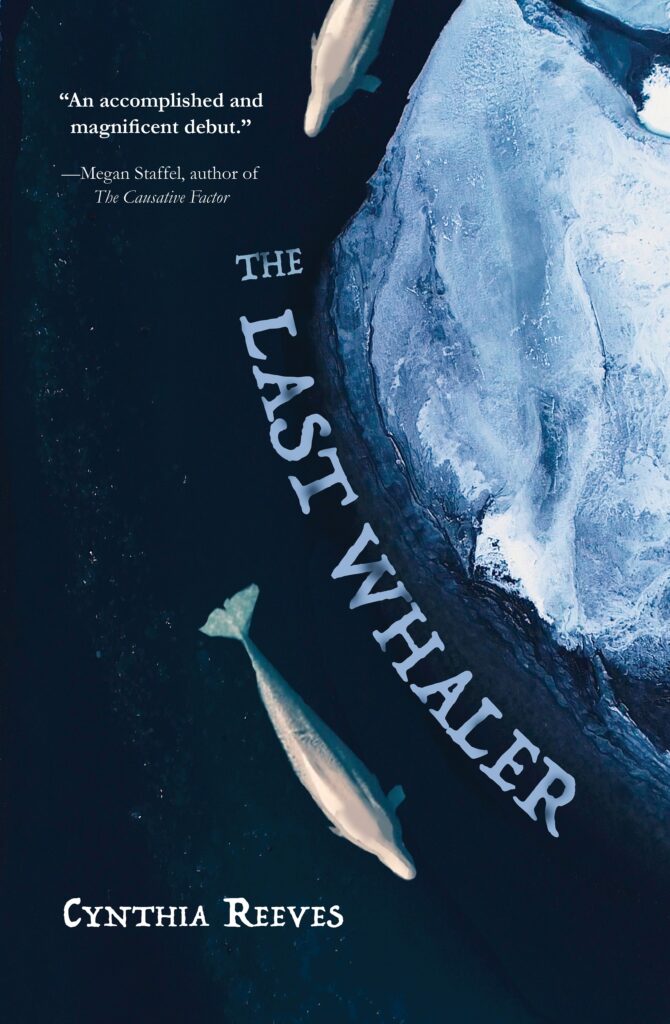
The Last Whaler
Set against the haunting beauty and brutal extremes of the Arctic, The Last Whaler follows Tor Handeland, a beluga whaler, and his wife, Astrid, a botanist specializing in Arctic flora, who are stranded during the dark season of 1937-38 at his remote whaling station on Svalbard when they misjudge ice conditions and fail to rendezvous with the ship meant to carry them home. Beyond enduring the Arctic winter’s eternal night, the couple must cope with the dangers of polar bears, violent storms, and bitter cold—and Astrid’s unexpected pregnancy. The Last Whaler is an elegiac meditation on the resilience of the human spirit, the enduring power of love and remembrance, and the fragile threads that connect us to each other and to our environment.
About The Author: Cynthia Reeves
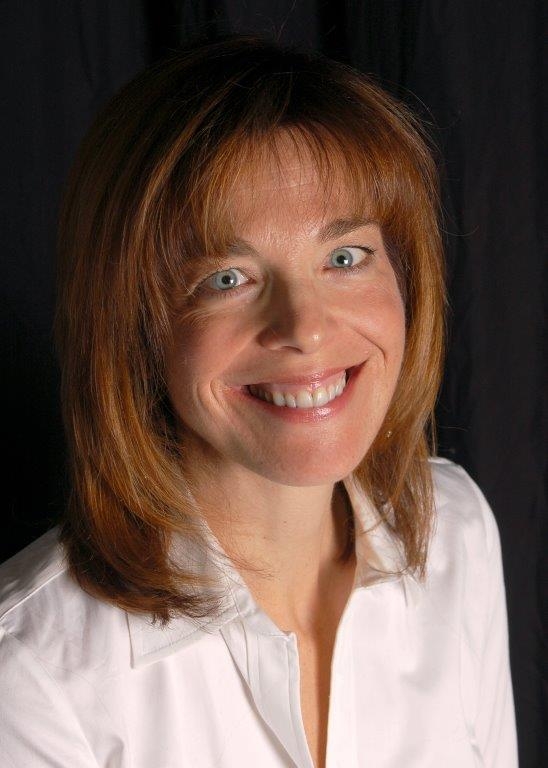
Cynthia Reeves’s fascination with the Arctic began in childhood, reading tales of doomed polar explorers. Her experience on the 2017 Arctic Circle Expedition along Svalbard’s western shores—and three later residencies in Longyearbyen—has since shaped her writing. Her most ambitious work, The Last Whaler (Regal House Publishing) has been praised by the New York Times as
“an engrossing historical novel that celebrates … an icy landscape filled with enchantment and danger.” She is also the author of the award-winning Falling Through the New World (Gold Wake Press), inspired by her Italian immigrant roots, and Badlands, winner of Miami University Press’s Novella Prize. A Hawthornden Fellow, Reeves holds an MFA from Warren Wilson College and has taught creative writing at Bryn Mawr and Rosemont Colleges.
Interview with Cynthia Reeves
What first sparked the idea for your book, and how did it grow into the story it became?
CR: I’ve had a lifelong passion for all things Arctic. Hiding under blankets in my childhood bed with flashlight in hand, I devoured stories of polar explorers. Shackelton, Peary, Scott, Nansen, Amundsen, Franklin—I knew their voyages and sometimes tragic outcomes by heart. Deep down, I longed to witness the sites that they’d often sacrificed their lives to discover. It was a strange wish, given my hatred of the cold and tendency toward seasickness. This early interest later merged with concern for human impact on the Arctic’s fragile eco-system.
What sparked The Last Whaler was my participation in the 2017 Arctic Circle Summer Solstice Expedition to Svalbard. One of our last landings was the site of an old beluga whaling station called Bamsebu on the southern shore of Van Keulenfjorden. Stretching to the horizon were whale bones, piles and piles of bleached beluga bones bearing silent testimony to the slaughter that occurred there in the 1930s. I knew right there and then that this otherworldly place would be a setting for a story. I even had a title—The Last Whaler.
Unfortunately, I knew little about what I needed to know to write a novel that dealt with whaling, Arctic flora, polar seasons, ship navigation, and so much more. What followed were two years of extensive research—hundreds of books, thousands of articles, and two extended stays at the Spitsbergen Artists Residency in Longyearbyen, one in fall 2019 as the archipelago entered the dark season and one in late winter 2020 as light returned. But the focus of my research was the whales. The cemetery representing the lives of 700 whales stayed with me throughout. I spent two years reading dry texts on the history and process of whaling, visiting aquariums to observe beluga in captivity, whale-watching off the coasts of Svalbard and Iceland, and reading other fictional works featuring whaling. I found that the history of whaling and whale conservation is complex and spans centuries. In short, whaling began with exploitation, whalers harvesting a bounty of oil, baleen, and buttery-soft skins; moved through a period of enlightenment as knowledge of the whale’s intelligence and endangerment spread; and finally alighted on the past century of increasingly stringent laws to govern whaling.
Stories of the emotional and intellectual lives of whales—a cow who lost her calf and carried a buoy for months as a substitute, a bull who lingered for weeks offshore after his mate was harpooned and dragged ashore, and the “conversations” with whales that scientists have documented—all became part of the narrative. And ultimately, though The Last Whaler is the story of the beluga whaler Tor Handeland, and his wife, Astrid, the novel is dedicated to the whales.
Introduce us to the world of your book. What should readers know about the story and the people (or ideas) at its center?
CR: At its core, the novel examines the emotional strains imposed upon a couple—the botanist Astrid Handeland and her husband, the whaler Tor—by the accidental death of their son. This tragedy precipitates their journey to Tor’s remote whaling station at Kvitfiskneset and all that follows.
Tor and Astrid are foils for each other, allowing me to illuminate what I found most compelling during that first trip to Svalbard. The whale cemetery represents the ways in which we damage sublime landscapes, and the whale harvest the ways in which we threaten species. Part of the tension that arises between Tor and Astrid derives from their opposing views over the slaughter. The whaling itself informs the setting—what life was like at an isolated whaling station, what catching, flensing, and trying-out whales entailed, how whales communicate, and how society’s attitudes toward whaling changed over those years as reflected by the novel’s protagonists.
The whaling station’s desolate landscape mirrors the couple’s isolation from each other caused by their coping in silence over the death of their son Birk. But the stark setting also forms a backdrop for the couple’s remarkable resilience and devotion. Their shared struggle for survival against all odds over the long polar winter is a testament to their enduring love.
My research extended far beyond whales and whaling to include Saami crafts and culture, botanical collection and preservation, skinning reindeer and tanning their hides, navigating ice-filled seas, glacier formation and calving, Norwegian history in the World War II era, and more. But what I found most fascinating were the real-life people who lived on Svalbard during the 1930s and 40s, especially the women who survived and even flourished there. Among them are: Christiane Ritter, whose memoir A Woman in the Polar Night recounts her year (1935-36) at a remote cabin in northern Svalbard with her husband; Hanna Resvoll-Holmsen, a Norwegian botanist and trail-blazing environmentalist who first catalogued Arctic flora in the early 1900s in her guide “Svalbards flora” (a rare copy of which I found in the library of Spitsbergen Artists Residency); and Helfrid Nøis, wife of the famous Norwegian hunter Hilmar, who carved a home at their remote compound at Sassen. Discovering Resvoll-Holmsen, in particular, led me to characterize Astrid as a botanist specializing in Arctic flora, which in turn informs the way she encounters her surroundings and the ways I could engage environmental concerns.
Was there a particular moment or scene that changed how you understood your own story as you were writing it?
CR: Before writing The Last Whaler, my work had been largely based on personal history and experience. In fact, that first voyage to Svalbard was inspired by my determination to write about something completely divorced from my life. Up to that time, my only encounters with the Arctic were through books. I had little knowledge of Norwegian history or whaling, and no background at all in botany let alone Arctic flora. I’d never lost a child or been forced into survival mode. In short, I thought this novel would mark a significant departure from my usual subject matter.
I was wrong. Let me explain.
At the novel’s heart is a realistic story of a husband and wife whose anguish over their son’s death propels them to an adventure that they hope will ease their grief. About three-fourths of the way into the first draft, I wrote a pivotal passage in which Astrid comes to the following realization:
“They say time heals all wounds. They lie.
They say grief ennobles, clears away trivial matters, reduces us to concerns for the essential. They lie.
Grief is like walking on an ice floe. It fools you into believing you’re standing on something solid, but moves imperceptibly beneath you and carries you into the unknown. It threatens at every step to fissure, to fracture, to open into leads that can swallow you whole.”
Quite literally at that moment, I, too, had a realization—the novel was a way to process my grief over the loss of my parents and my only uncle. In fact, I was drafting the novel around the time my father and uncle were dying and died three days apart in 2019, and I’d lost my mother seven years before. I’d been led to believe that managing the grief over loved ones’ deaths would be linear—denial, anger, bargaining, depression, acceptance—but I found the process to be cyclical, moving from profound grief to a degree of acceptance and a lifting of that veil of sadness to a return to almost the same sorrow of those early stages of loss. Astrid’s words channeled my similar anger and frustration. The novel’s elegiac and meditative quality comes from living through that period of my life, so it very much is as personal as anything else I’d written up to that time.
What themes or emotions run beneath the surface of your book—what were you hoping to explore or uncover through this story?
CR: At its core, The Last Whaler is a story of a marriage under existential stress. The novel strips this relationship to its essence, asking: What keeps a couple together? What drives a couple apart? How does memory function to continue a relationship, even after death? What exactly is love?
On a more personal note, when I became an “adult orphan” in the wake of my parents’ deaths, I experienced a deep sense of dread that lasted for over a year. I eventually realized that this was a way to come to terms with my mortality. In exploring that emotion, especially through Astrid’s thoughts and actions, I channeled my own sense of dread into the writing.
Set against these human elements are the many aspects of environmental concern, most especially the tension between the desire to stand before the sublime in nature and the damage we do by encroaching on pristine landscapes. The over-harvesting of whales is but one aspect of this damage, and the long history of whale conservation is one of the bright spots in our effort to correct the mistakes of the past.
If a reader stops you to talk about your book, what do you most hope they’ll say it made them think or feel?
CR: The Arctic affects the psyche. Even the flight over the vast, undulating white terrain leading into Longyearbyen airport feels as if one is entering another world—a frozen landscape riven with fissured glaciers spilling down into the waters that surround the archipelago. Capturing that landscape and communicating its effects to readers were my great challenges. Astrid’s first impression of the sea as Tor guides his ship along Isfjord is but one example:
“The sea whirls and bubbles, as if breathing, and disappears into little vortices created by the currents washing up against small icebergs that the crew calls bergy bits. I’m mesmerized by their colors—shades of crystalline bluish white, like pieces of broken sky. They twirl around each other, dancing to unheard music. I listen. There is music. The jingling of bells, the crash of cymbals, the boom of the bass drum.”
I believe that if The Last Whaler allows readers to appreciate the Arctic sublime, they will be motivated to preserve its beauty. Readers have told me that the novel makes them feel as if they’re in the landscape, experiencing what the characters experience—the feel of bitter cold, the way the full moon illuminates a snowy landscape, the effect of the polar night on the mind, and so forth. That’s what I find most gratifying.
Find a featured excerpt of The Last Whaler on PAGE 34 in the December/January/February Issue: 2025 Indie Best Award Winners.

Continue Reading…
Article originally Published in the December/January/February 2025 Issue “2025 Indie Best Award Winners”